Shop window display ideas for an independent shop
Shop window display ideas for an independent shop, café, or bakery: one clear idea, a price people can read, a seasonal plan, and a way to bring people back.
On this page
- What a shop window has to do
- Shop window display ideas that work for a small shop
- 1. One hero product, with room around it
- 2. A color story
- 3. Show the making
- 4. “What our regulars order”
- 5. Price what is in the window
- 6. A seasonal window on your own calendar
- 7. A window for the time of day
- 8. Tell a local story
- 9. Make the window a noticeboard for what is on
- 10. Put a way to join your loyalty card where the window leads
- 11. Light it for the dark afternoons
- A year of windows
- Window display ideas by trade
- How often to change a shop window
- Prices, posters, and the rules in the UK
- What a shop window cannot do
- FAQ
The best shop window display ideas for an independent shop are simple: one clear idea, readable from across the street in a few seconds, changed often enough that regulars notice. A good window stops someone walking past, shows them what you sell, and gives them a reason to step in today. A bakery does it with the morning’s bake, a gift shop with three things on a theme, a barber with a chair and a price.
This guide gives you shop and store window display ideas that cost little, a year of seasonal themes, and a table of ideas by trade. It also covers the two rules worth knowing in the UK before you put a price or a poster in the glass. It ends with the part most windows miss: what happens after the person who stopped walks back out.
Key takeaways
- A window has about as long as someone takes to walk past it. One idea, one focal point, and a few words beat a full shelf.
- Change it on a schedule. A window that never changes becomes wallpaper to the people who pass it every day, and they are your likeliest customers.
- In the UK, goods displayed for sale in a shop window must show a price. A purely promotional display is treated as an advertisement instead.
- Start planning each seasonal window four to six weeks before it goes up, on your own calendar, not only the big national dates.
- The window brings the first visit. Put a way to join your loyalty card where the window sends people, so the second visit does not depend on luck.
What a shop window has to do
A window has three jobs, in order: stop, show, and invite.
- Stop. Something has to break the pattern of a street someone walks every day: a strong color, movement, light, or one object at a scale they do not expect.
- Show. In the same glance, the passer-by should know what you sell. A window full of props and no product makes them guess, and most will not.
- Invite. Give a reason to come in now: something new, something seasonal, something only here, or a price that answers the question before it is asked.
A quick test: stand on the far side of the street, look for three seconds, then turn away. If you cannot say what the window was about, it is trying to say too much.
Shop window display ideas that work for a small shop
These ideas suit cafés, bakeries, salons, barbers, pubs, and independent retail. Most need nothing you do not already own.
1. One hero product, with room around it
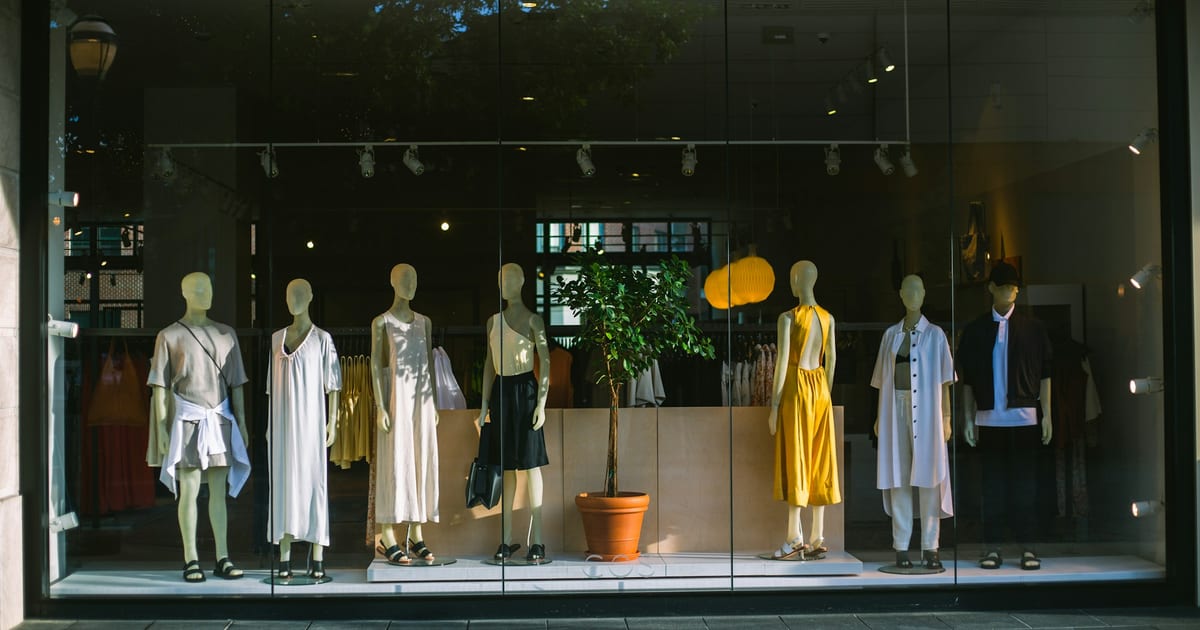
Pick one product and give it the window. A single cake on a stand, one coat on one form, one bottle lit from above. Empty space is what makes it look chosen rather than stored. If you sell many things, rotate the hero each week and let the window become the “what’s new” spot regulars check.
2. A color story
Choose one or two colors and build everything around them: products, props, backdrop. A window of only green things in March, or only red and gold in December, reads from much further away than a mixed display. It also lets you use what you have, since you are grouping stock rather than buying props.
3. Show the making
People stop for things being made. A bakery can put the bread rack or a tray of pastries cooling where the street can see it. A florist can build a bouquet at a bench by the glass. A barber can angle a chair so the street sees the work, not the back of a client’s head. The window becomes proof of the craft, which a poster can only claim.
4. “What our regulars order”
A small card next to three items, written by hand: “What our regulars order.” It answers the stranger’s real question (what is good here?) and quietly tells them you have regulars. Change the three items with the season.
5. Price what is in the window
A window full of goods with no prices makes people assume the worst. In the UK it is also a legal question.
Trading Standards guidance on the Price Marking Order says “Items displayed for sale in a shop window must display pricing information,” with an exception for jewelry, precious metal, and watches priced over £3,000. Displays with nothing that is taken out and sold “will fall within the definition of ‘advertisement’ and be exempt” (Business Companion, Chartered Trading Standards Institute, reviewed April 2026, retrieved November 20, 2026).
The same guidance asks for prices that are clearly legible, unambiguous, and easily identifiable. A neat ticket beside each item does that.
6. A seasonal window on your own calendar
The national dates matter, but so do yours: the first asparagus, the new term, the week your street holds its market. Start planning each window four to six weeks before it goes up, so it is in the glass while people are still deciding. See a year of windows below for a starting plan.
7. A window for the time of day
A café window that shows breakfast at 8 and cake at 3 is talking to the people actually walking past. Even a small change works: a chalkboard that turns from “porridge and coffee” to “afternoon slice” at noon. Use it to nudge the hour you want to fill. If your mornings queue out the door and your afternoons are empty, the window should sell the afternoon. The quiet Tuesday problem explains why moving demand is often worth more than adding to the rush.
8. Tell a local story
Name the farm the eggs come from, the brewery down the road, the illustrator who drew your bags. Local stories are something a chain window cannot copy, and they give a passer-by something to remember you by.
9. Make the window a noticeboard for what is on
A pub can put the quiz night, the live music, and the match schedule where the street sees them first. A salon can show the late-opening evening. Keep it to one event at a time, in large type, with the day and time. Pub event ideas has events worth advertising.
10. Put a way to join your loyalty card where the window leads
Someone who stops at your window and steps inside is the customer you most want to see again. Give them a reason and a way: a loyalty card does both (Passumo sells one, more on that below). A small sign in the window can say what the card gives (“Your 8th coffee is on us”). The QR code to join belongs at the till, where the phone is already in their hand.
The iPhone camera reads a QR code without any extra app (Apple Support, “Scan a QR code with your iPhone camera”, retrieved November 20, 2026), and many Android phones do the same from the camera or Google Lens. What to put next to the till covers where the code goes and what the sign says.
11. Light it for the dark afternoons
From November to February, many shops are open in the dark for part of the day. A window lit from above, with warm light on the hero product, works like a sign on a dark street. Put the lights on a timer so the window keeps working for an hour or two after you close, when people walk home past it.
A year of windows
A simple plan for a UK shop. Start planning each window four to six weeks before it goes up. Put it up when the one before comes down, so there is only ever one idea in the glass.
| Window | Date it serves | Start planning | In the window | Idea |
|---|---|---|---|---|
| Christmas | December 25 | Early October | Mid November to December 24 | Gifts in a color story, order deadlines in large type |
| January | The whole month | Early December | January 2 to 31 | Bright, plain, and calm. What is new, not what is reduced |
| Valentine’s Day | February 14 | Early January | February 1 to 14 | One hero gift or table for two, with the price |
| Mothering Sunday (UK) | March 7, 2027 | Mid January | February 15 to March 7 | Flowers, cake, or a treatment, ready to pre-order |
| Easter | March 28, 2027 | Early February | March 8 to 28 | Spring colors and the Easter bake or range |
| Spring | Your own calendar | Late February | March 29 to late May | A local story or a new range (ideas 2 and 8) |
| Summer | June to August | Late April | Late May to mid August | Outdoor, cold drinks, the long evenings |
| Back to school | September | Early July | Mid August to September | Routine, the new term, the return of regulars |
| Autumn | Your own calendar | Late August | October to mid November | Harvest colors, the new season’s bake, or Halloween if it suits your street |
Small Business Saturday (Saturday, December 5, 2026) does not need its own window. Add a “shop local” card with your makers’ names to the Christmas window for that week.
The big dates have their own guides: Christmas marketing ideas, Valentine’s Day, Mothering Sunday, and Easter.
Window display ideas by trade
| Trade | Window idea | Why it works |
|---|---|---|
| Bakery | The morning’s bake on a rack by the glass, prices on tickets | Shows freshness, the thing people choose a bakery for |
| Café | A chalkboard that changes from breakfast to afternoon | Sells the hour you want to fill, not the one already full |
| Independent retail | One hero product a week, with space around it | Gives regulars a reason to look every time they pass |
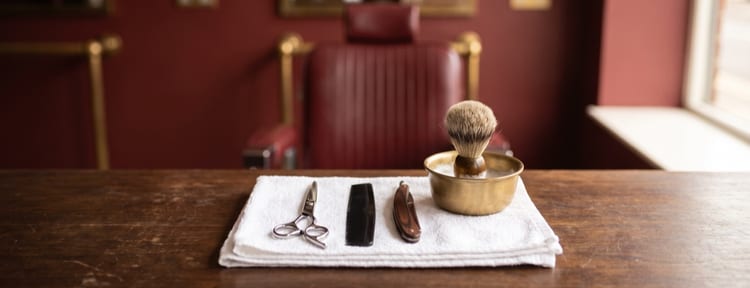
| Hair salon or barber | A chair angled to the street, a price list in large type | Shows the work and answers “how much?” before they ask |
| Pub or bar | This week’s one event, with the day and time | Turns passing foot traffic into a planned visit |
| Takeaway | The menu’s three best sellers, priced, readable from the curb | Decides the order before the phone comes out |
| Florist or gift shop | A color story that changes with the season | Reads from across the street and uses existing stock |
If you run a bakery, bakery customer loyalty ideas picks up where the window leaves off. For independent retail, loyalty cards for shops covers what to reward when visits are less frequent than a café’s.
How often to change a shop window
Change something every two to four weeks, and the whole window every season. The people who pass your shop most often are the ones who live and work on your street, and they stop seeing a window that never changes. A rotating hero product (idea 1) or a weekly “what our regulars order” card (idea 4) keeps the window alive between full changes.
Keep a short window log: the date, the theme, and what you noticed. After a year you have your own evidence of what your street responds to.
Prices, posters, and the rules in the UK
Two rules are worth knowing before you fill the glass. The first applies across the UK. The second, as written here, applies in England.
Prices. Goods displayed for sale in a UK shop window need a price, as covered in idea 5.
Posters and signs. In England, advertisements are controlled by the Town and Country Planning (Control of Advertisements) Regulations 2007. An advertisement inside a building is outside the rules altogether if it is not illuminated and no part of it is within one meter of an external door or window it can be seen through (Schedule 1, Class I).
A poster displayed inside a building that does not meet those conditions, such as one stuck up against the glass, has deemed consent under Schedule 3, Class 12 (both retrieved November 20, 2026). In practice, a poster or a vinyl on the inside of your window does not usually need an application.
Signs on the outside of the building, lit or not, follow different rules. Wales, Scotland, and Northern Ireland have their own regulations, and a conservation area or listed building can add more, so check with your council before anything lit or fixed outside.
What a shop window cannot do
A good window gets the first visit. It does nothing about the second. The person who stopped, came in, and bought a loaf walks back out, and unless they happen to pass again, you have no way to reach them.
That second half is where Passumo, which sells the loyalty card and messaging this blog is about, comes in. The customer adds your loyalty card to Apple Wallet or Google Wallet at the counter, with nothing to download.
From then on you can reach the members who opted in. Push suits today’s news (“New window, new bake: the first stollen of the year is out”). Email suits the month ahead, and SMS the messages that matter. Automations send the welcome, the birthday treat, and the “we miss you” without you writing each one.
For more ways to get people through the door, see the small business marketing ideas roundup. If you run a café, how Passumo works for cafés shows the counter flow.
FAQ
What makes a good shop window display? One clear idea, a focal point that reads from across the street, prices on anything for sale, and a reason to come in today. If someone cannot tell what you sell in a glance, simplify.
How much should a small shop spend on a window display? Very little, for most windows. A color story, a hero product, and a handwritten card use stock you already have. Spend on good lighting first, because it works every day, and in the dark months it does most of the job.
Should I put a QR code in the shop window? A sign in the window can tell people about your loyalty card, but put the QR code to join at the till. That is where a customer already has their phone out, and where staff can mention it in one sentence.