Customer loyalty: what it is and how a small shop builds it
What customer loyalty is, why repeat visits alone are not proof of it, and how a café, salon, or shop builds the kind that survives a cheaper option.
On this page
- What is customer loyalty?
- The four types of customer loyalty
- Why customer loyalty matters to a small business
- Satisfied customers are not the same as loyal ones
- How to build customer loyalty in a small shop
- 1. Know who your customers are
- 2. Give the habit a reason to form
- 3. Recognize people, by name if you can
- 4. Stay in touch between visits
- 5. Notice when someone drifts
- Can a loyalty program create customer loyalty?
- How to tell whether your customers are loyal
- Where Passumo fits
- Frequently asked questions
- Where to go next
Customer loyalty is a customer who keeps choosing you and would rather it was you. It has two halves: what they do (they come back) and how they feel (they prefer you to the alternatives). A shop needs both, because the first without the second lasts only until something more convenient opens nearby.
That is the part most definitions skip. A regular who visits every morning looks loyal on the till. But if they come because you are on the way to the station, they will go when the route changes, or when a cheaper place opens next door.
This guide explains what customer loyalty is, the four kinds of customer it produces, and how a small business with no marketing team builds the kind worth having.
Key takeaways
- Customer loyalty has two halves: repeat visits and a real preference. Researchers have treated loyalty this way since at least 1994.
- Repeat visits without the preference are fragile. They come from convenience or habit, and a new option nearby can end them.
- Satisfied customers are not automatically loyal. Being known, and the personal bond that comes with it, is where a small shop can beat a chain.
- A loyalty card builds the behavior. Recognition and staying in touch build the preference. You need both.
What is customer loyalty?
A widely cited definition comes from Richard Oliver, a marketing researcher. He described loyalty as “a deeply held commitment to rebuy or repatronize a preferred product/service consistently in the future, thereby causing repetitive same-brand or same brand-set purchasing, despite situational influences and marketing efforts having the potential to cause switching behavior” (Oliver, Journal of Marketing, 1999).
In plain terms: a loyal customer prefers you, keeps coming, and keeps coming even when something tempts them elsewhere. The last part is the test. Loyalty only shows itself when the customer has a reason to leave and does not.
For a café, that might be the new chain on the corner with a cheaper flat white. For a barber, a walk-in place with no wait. For a bakery, the supermarket’s own sourdough at half the price.
The four types of customer loyalty
In 1994, Alan Dick and Kunal Basu described customer loyalty as “the strength of the relationship between an individual’s relative attitude and repeat patronage” (Dick and Basu, Journal of the Academy of Marketing Science, 1994). Relative attitude means how much a customer prefers you over the other options. Repeat patronage means how often they actually come.
Crossing the two gives four kinds of customer. Dick and Basu called them loyalty, latent loyalty, spurious loyalty, and no loyalty.
Each kind needs a different move. The labels are theirs; the shop examples and the advice are ours.
| Kind | What it looks like in a shop | What to do | Why it matters |
|---|---|---|---|
| Loyalty | The regular who walks past two other cafés to reach yours | Recognize them and keep in touch | These are the customers who carry your quiet weeks |
| Latent loyalty | The client who loves your salon but books once a year | Remove the obstacle: a reminder, an easier booking, a reason to come sooner | They already like you; the gap is practical, not emotional |
| Spurious loyalty | The commuter who comes because you are on the way | Give them a reason to prefer you: be known, not just near | Convenience is easy for a competitor to match |
| No loyalty | The one-off visitor passing through | Ask them to join so the second visit is possible | Some will never return, and that is fine |
Spurious loyalty is the one to worry about. It looks healthy on the till, and it disappears without warning when the customer’s situation changes.
Why customer loyalty matters to a small business
The usual argument is about cost. As Amy Gallo summarized it in Harvard Business Review: “Depending on which study you believe, and what industry you’re in, acquiring a new customer is anywhere from five to 25 times more expensive than retaining an existing one” (Gallo, Harvard Business Review, 2014). Note the hedge in her own sentence. The range is wide, and none of the studies behind it were about corner cafés.
For a local shop, the stronger reasons are practical:
- Your pool of new customers is small. For most local shops, the people who will ever visit live or work nearby. Losing a regular is hard to replace.
- Loyal customers forgive. A slow Saturday or a sold-out pastry costs you a stranger. It rarely costs you someone who prefers you.
- They fill the quiet hours. A regular with a real preference can be moved to Tuesday afternoon with one message. A passer-by cannot.
- They bring people. Recommendations from someone who likes you carry more weight than any sign in the window.
Satisfied customers are not the same as loyal ones
It is tempting to assume that good coffee and a good haircut produce loyalty on their own. Oliver argues otherwise. He concluded that “although loyal consumers are most typically satisfied, satisfaction does not universally translate into loyalty” (Oliver, 1999).
Satisfaction gets a customer to the second visit. Oliver argues that what carries it further includes social bonding, the sense of belonging around a place. In a small shop, in our view, the most direct form of that is the relationship with the people who serve them.
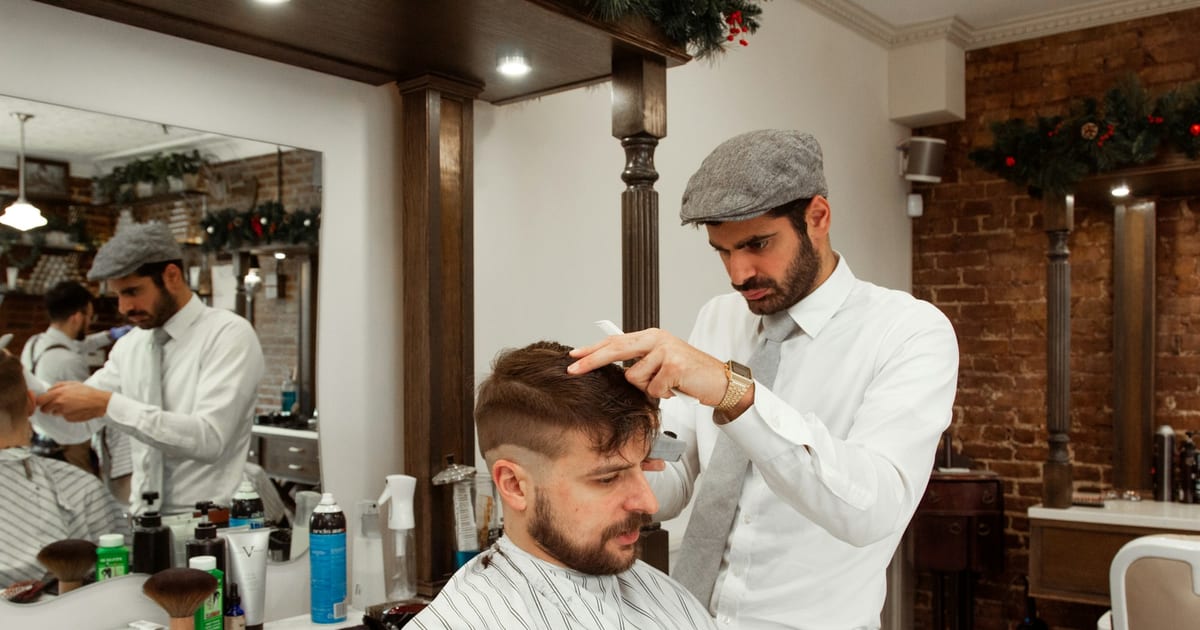
This is where a small business has an advantage a chain struggles to copy. A barber who remembers how you like the back, a café that starts the order when you walk in, a bakery that holds the last loaf for you. Those are personal bonds, and they are what make a customer stay when the cheaper option opens.
Doing the job well is the entry ticket. Being known is what makes people stay.
How to build customer loyalty in a small shop
Building customer loyalty means working on both halves at once: give people a reason to come back, and give them a reason to prefer you when they do.
1. Know who your customers are
You cannot build a relationship with someone you cannot identify. Ask every customer to join something at the till, every time. A loyalty card is the easiest version, because the customer gets something for telling you who they are. What is a loyalty card? covers the basics if you do not have one yet.
2. Give the habit a reason to form
A reward within reach brings the next visit forward. That builds the behavior half, but it is only half. If the card is the only reason anyone comes, you have bought spurious loyalty. What a stamp card is actually for explains why the reward should be a reason to return, not a discount.
3. Recognize people, by name if you can
Recognition builds the preference half. Use names. Remember the usual. Mark a birthday or a tenth visit with something small and personal. A note on a customer’s record lets a new staff member greet a regular the way you would. Birthday and milestone messages has the wording for the two dates most worth marking.
4. Stay in touch between visits
A customer who hears nothing from you between visits forgets you slowly. Staying in touch keeps you in their week, on the channel that suits the message, and only with people who asked to hear from you (getting marketing opt-in explains the consent part).
- Push, for something happening today: “Fresh focaccia at 11. Members get first pick.”
- Email, for keeping a place in their month: the new menu, the holiday hours, the new stylist.
- SMS, for the message that has to be seen: “We had a cancellation at 2pm today, Ana. Want it?”
Push or email: which one to send covers the choice in detail.
5. Notice when someone drifts
Regulars rarely announce they are leaving. They come less, then stop. Pick a gap that is unusual for your trade and send one plain, personal message when you see it. Win-back messages that work has examples.
These five steps are the short version. The full list, with how to measure each one, is in customer retention strategies for a local business.
Can a loyalty program create customer loyalty?
Partly. A loyalty program is very good at the behavior half and weaker at the attitude half. A 2022 meta-analysis pooling three decades of studies found programs move what customers do more readily than how they feel (Belli et al., Journal of the Academy of Marketing Science, 2022). That evidence is summarized in do loyalty programs work?
In our view, the card is how loyalty starts, not what it is. The card gets the customer to identify themselves and come back a few times. What happens after that (being recognized, hearing from you at the right moment, being missed when they are gone) is what turns repeat visits into a preference.
A program that is only a discount risks the opposite. It teaches customers to come for the deal, which is spurious loyalty by design.
How to tell whether your customers are loyal
You will not get a perfect measure, but a few signals separate real loyalty from convenience:
- Visit frequency holds up when something changes. A price rise, a new competitor, the street dug up outside. Loyal customers keep coming.
- Regulars respond to messages that ask for nothing. An update or a thank you gets replies, not just a sale.
- Customers come back after a gap. A loyal customer who moved away still visits when they are in the area.
- They recommend you. Ask new customers how they heard about you, and count the answers that name a person.
For the numbers behind a program, such as repeat rate, visit frequency, and lapsed members, see loyalty program metrics.
Where Passumo fits
We make Passumo, so treat this as a recommendation from an interested party. It gives a local business a loyalty card that lives in Apple Wallet or Google Wallet, with nothing for the customer to download. Behind the card is a customer list with visit history and birthdays, plus push, email, and SMS from the same place. Automations send the welcome, the reminder when a customer is one stamp away, and the win-back when a regular goes quiet.
The card earns the visit. Knowing the customer and staying in touch earns the preference.
Frequently asked questions
What is customer loyalty in simple terms? It is a customer who keeps coming back to you and would rather come to you than anywhere else. Both parts matter: the repeat visits and the preference.
What are the types of customer loyalty? A common framework from Dick and Basu (1994) gives four: loyalty (strong preference, frequent visits), latent loyalty (strong preference, rare visits), spurious loyalty (frequent visits, weak preference), and no loyalty.
What is the difference between customer loyalty and customer retention? Retention is the behavior: customers come back. Loyalty includes the reason they come back. A retained customer may only be there out of convenience; a loyal one would choose you anyway.
How do you build customer loyalty without discounts? Recognize people by name, remember their usual, mark the occasions that matter to them, and stay in touch between visits. A reward for coming back helps, but it should be a reason to return, not a price cut.
Why is customer loyalty important for a small business? Because most of your customers come from a small area, losing one is hard to replace. Loyal customers also forgive bad days, fill quiet hours when asked, and recommend you to people nearby.
Where to go next
If you are starting from nothing, the first decisions are in how to start a loyalty program. For your own trade, see how this works for cafés, barbers, and hair salons.