Loyalty segmentation: who to message, and when
Sending to everyone is how a list dies. Four segments cover almost every small shop, and each one wants a different message at a different moment.
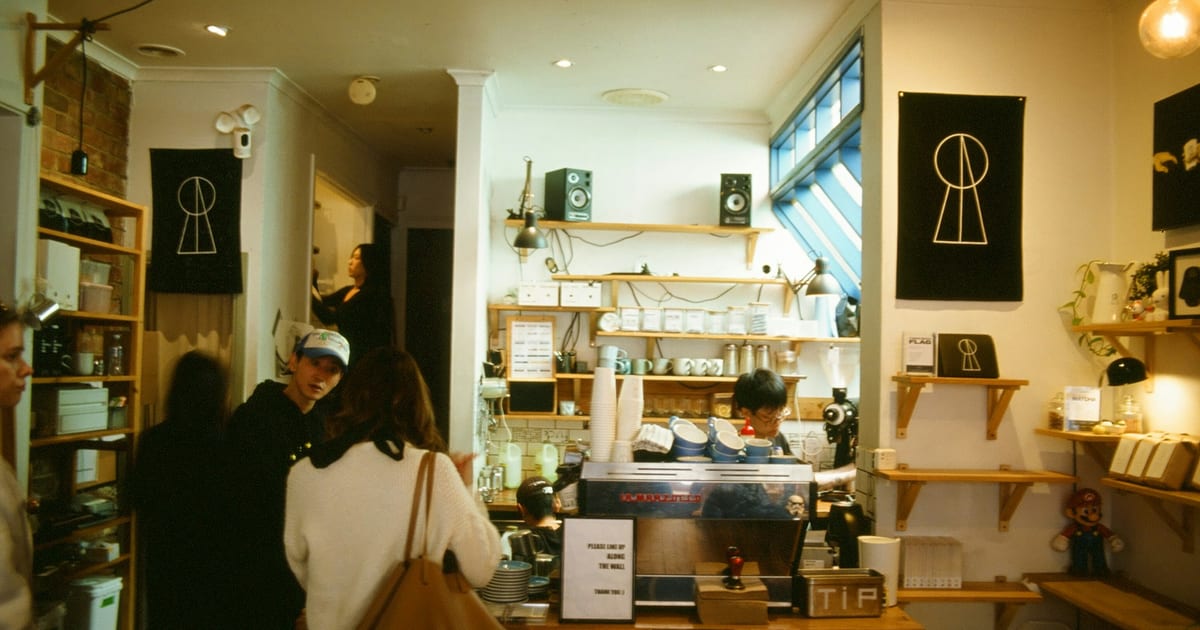
Once you have a few hundred people on a loyalty card, you own something genuinely valuable: a direct line to the customers who already like you, with no algorithm and no commission in between.
The usual way of ruining it is to send everything to everyone. It feels efficient (one message, maximum reach) and it steadily trains your best customers to ignore you. The person who comes in four times a week does not need a “we miss you”. The person who came once in March does not need to hear about your quiet Tuesday offer. Send both to both and you have taught everyone that your messages are not about them.
Segmentation is the fix, and for a small shop it is much simpler than the word suggests. Four groups cover nearly everything.
Key takeaways
- Recency is the strongest signal you have. When someone last visited predicts their next visit better than how much they have ever spent.
- Four segments cover most shops: new, near-reward, regular, and lapsing.
- Each segment wants a different message, and two of them want no message at all most of the time.
- Define “lapsed” from your own average interval, not from a round number of days. Thirty days means nothing in the abstract.
- The point of segmenting is usually to send less, not more.
Recency, frequency, spend
Direct marketers have sorted lists on the same three variables for decades: recency (how long since the last visit), frequency (how often they come) and monetary value (how much they spend). The convention in that trade is that recency is the most predictive of the three. It holds up in a small shop. Someone who came last week is far more likely to come this week than someone who spent a lot last spring.
You do not need a model. You need those three numbers per customer, which a loyalty card gives you automatically, and the discipline to act on the first one.
The four segments
| Segment | Who they are | What they want | How often |
|---|---|---|---|
| New | Joined, one or two visits | A reason to come a third time | Once, in the first fortnight |
| Near reward | Two or three off finishing | A nudge that they are close | Once, when it is true |
| Regular | Visiting at or above your normal rhythm | Almost nothing | Rarely, and only something good |
| Lapsing | Past their own usual interval | One genuine reason to return | Once, at the right moment |
New
The most fragile group and the one with the most upside. Someone who joined and came twice has not formed a habit; they are one indifferent visit from never returning.
Send one welcome, quickly, and make it concrete: what the reward is, how far off it is, and ideally a first stamp already on the card. Visible progress from the outset measurably improves the odds someone finishes. The endowed progress effect is the clearest finding in this whole field.
Then leave them alone and let the card work.
Near reward
The easiest win available to you, and the one most shops never use.
Someone two stamps off a free coffee is already motivated; they just may not know where they are. A single message (“you’re two away”) converts at a rate nothing else on this list matches, because you are not persuading anyone of anything. You are removing an information gap.
People also move faster as they approach a goal. A café loyalty-card study by Kivetz, Urminsky and Zheng (Journal of Marketing Research, 2006) documented it: purchase rates rose as customers neared the reward. Your message lands on people already accelerating.
Send it once per card, when it becomes true.
Regular
The counter-intuitive one: your best customers should hear from you least.
They are already coming at the rhythm you want. A discount to a regular is money handed to someone who had no intention of leaving, and a stream of promotions is the fastest way to make a valued customer mute the pass.
Message them for two reasons only: something genuinely exclusive and early (a new menu, a members’ night, a first look at something) or a thank-you with no ask attached. Both make the card feel like membership rather than marketing.
Lapsing
The group where a real offer earns its cost, because the alternative is losing them.
The essential move is to define “lapsing” from their pattern, not a calendar. Someone who came weekly and has not been in for three weeks is a problem. Someone who comes monthly and has not been in for three weeks is not late at all. Send the same message to both and half of it is wrong.
If you can only manage one rule, use a multiple of your own average interval: overdue at about 1.5×, properly lapsed at 2 to 3×. A café might nudge at three weeks; a salon at three months.
What to put in the message once somebody crosses that line is win-back messages that actually bring people back.
How often is too often
There is no universal number, but there is a reliable test: would you send this to a customer standing in front of you?
Practical limits that hold up in most small shops:
- No more than one message a fortnight to any individual, across all campaigns.
- Never two in a week, however different they are.
- A quiet-period offer beats a busy-period one every time. If the message would land on a Saturday morning queue, it is costing you more than it makes.
Notice that all three are per person, not per campaign. Running four well-targeted campaigns a month is fine as long as no single customer is in all four. This is the main practical reason to segment: it lets you be active without being noisy.
They are also per person, not per channel. A push, an email and an SMS in the same week is three interruptions, however tidily they are split across three screens.
The fortnight rule is the floor. Where the ceiling actually sits, and why it moves by channel, is covered in how often should you message your customers?
Which channel each segment wants
Segmenting decides who hears something. The channel decides whether they read it.
| Segment | Channel | Why |
|---|---|---|
| New | The welcome is worth more than one line, and it is the moment they are most willing to read one | |
| Near reward | Push | It is true right now and it stops being true when they redeem |
| Regular | Monthly, worth reading, never urgent. Push would make a habit feel like an interruption | |
| Lapsing | SMS | The one message that has to be seen, sent to the one segment where silence costs you the customer |
The pattern is the same everywhere: push for what is true today, email for what is worth reading, SMS for what you cannot afford to have missed. Push needs no more than the card. Email and a mobile number need asking for on the join page, which is worth doing at the moment someone is already filling a form.
Defining segments without a spreadsheet
You need three things, all of which a card records for you: last visit date, visit count, and progress on the current card. From those:
- Work out your average interval. Take your regulars’ visit gaps and take the middle. This one number defines “lapsing” for you.
- Set near-reward as a fixed distance from the end. Two stamps off on a ten-stamp card; three off on a twenty.
- Treat “new” as a count, not a date. Fewer than three visits, whenever they joined.
- Everyone else is regular. They need nothing from you most months.
Keep the definitions written down and unchanged for a couple of months. Segments that get redrawn every campaign cannot be compared to each other, and comparison is the only way you will learn which ones respond.
What to watch per segment
Measure by segment or you will not learn anything. The relevant question is different for each:
- New: what share reach a third visit.
- Near reward: what share finish the card after the nudge, against those who got no nudge.
- Regular: whether their interval is holding steady. It should be flat; if it is lengthening, something in the shop has changed.
- Lapsing: what share return within a fortnight of the message.
The underlying numbers, and which ones actually indicate a healthy program, are covered in loyalty program metrics.
Frequently asked questions
How many members do I need before segmenting is worth it? Around a hundred. Below that the segments are too small to compare and you are better off concentrating on enrollment.
Should I segment by age or zip code? Rarely useful at this scale. Behavior beats demographics: what someone actually does in your shop tells you far more than who they are.
What about people who joined and never came back at all? Try once with something genuinely good. If nothing, leave them. They cost you nothing to keep on the list and chasing them is a poor use of the attention you have.
Can I automate this? Yes, and you should: the segments above are exactly the ones worth turning into standing campaigns rather than remembering to send by hand. That is automated loyalty campaigns.
Does a small shop really need four segments? Start with two: near-reward and lapsing. They carry most of the value. Add the others once those are running without your attention.
Where to go next
Segmentation is the middle of three steps: get people onto the card, sort them, then send the right thing without having to remember to. The last of those is automated loyalty campaigns, and the scoreboard for all of it is loyalty program metrics. The whole sequence sits in the complete guide.
Passumo records visits, statuses and card progress per customer, and push campaigns can be aimed at a chosen audience rather than the whole list.